

The spirit of the Special Economic Zones, an important part of the CPC’s great founding spirit and its rich legacy developed over the course of China’s revolution, construction and reform, embodies the pioneering character of reform and opening up and the dynamic practice of Chinese modernization. To further implement General Secretary Xi Jinping’s important remarks and instructions on the development of ideological and political theory courses and enrich teaching resources, faculty members from the School of Marxism at the University of Shanghai for Science and Technology (USST) attended a summer training program in Shenzhen from August 24 to 28.
On the afternoon of August 24, Yang Jing from the Shenzhen Reform and Opening Up Executive Leadership Academy delivered a lecture titled “Studying Shenzhen’s History of Reform and Opening Up and Carrying Forward the Spirit of the Special Economic Zones.” Reviewing Shenzhen’s remarkable development over more than four decades, Yang discussed the contemporary significance of the spirit of the Special Economic Zones and explored how the history of reform and opening up can be incorporated into ideological and political education in the new era.
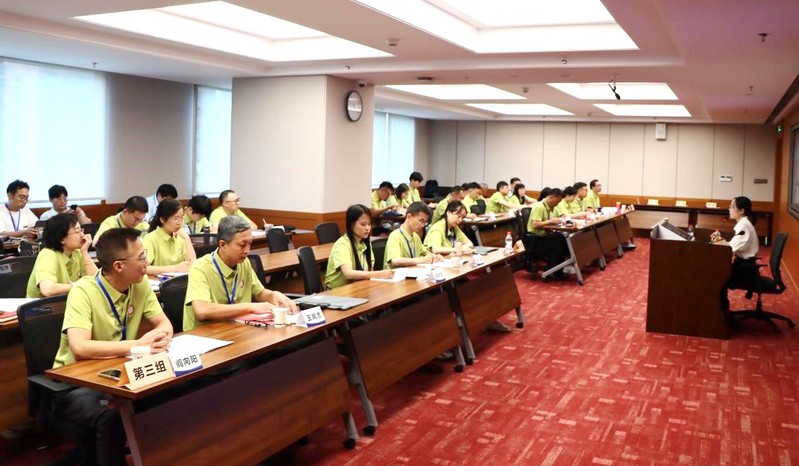
The thematic lecture
The practice of reform and opening up provides rich and vivid material for ideological and political education. During the program, the faculty members conducted field studies in Luohu, Futian, Nanshan and Yantian districts.
At “The Great Tides Surge along the Pearl River,” an exhibition commemorating the 40th anniversary of Guangdong’s reform and opening up, and at Qianhai Stone Park, the faculty traced the course of reform and opening up and witnessed Shenzhen’s transformation from a small border town into an international hub of innovation. The visits offered first-hand insights into Shenzhen’s pioneering approach to reform and the practical experience of Chinese modernization.
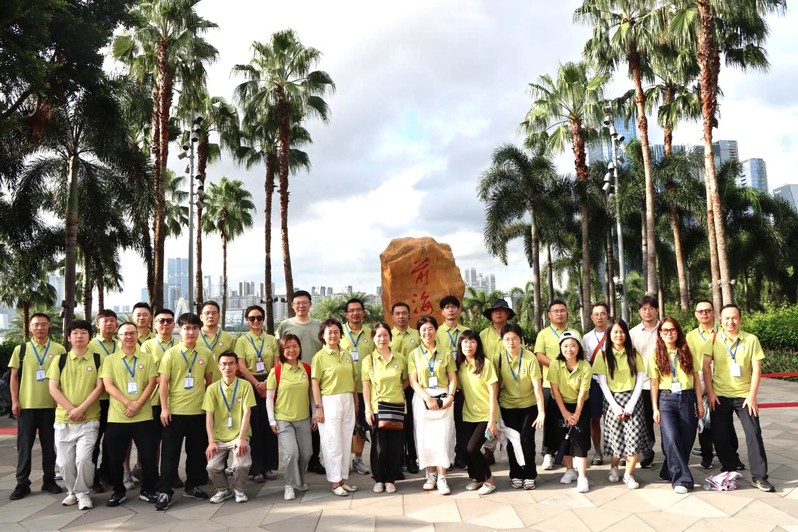
Faculty members visit Qianhai Stone Park in Shenzhen
Upholding the overall leadership of the Communist Party of China is a fundamental guarantee for the steady and sustained advancement of reform and opening up. During a visit to Sunway Group in Bao’an District, the faculty learned about the company’s distinctive “four-step” approach to Party building and explored how Party building has contributed to the transformation, upgrading and high-quality development of private enterprises. The visit provided useful cases for teaching Party building and offered practical insights into Party-building work in new types of economic and social organizations.
Innovation was another focus of the training program. At Xili Lake International Science and Education City, the faculty explored local practices in cultivating scientific and technological talent and building entrepreneurship support systems. At Eastern General Aviation in Yantian District, they examined the development of the low-altitude economy and gained a closer understanding of how technological innovation is generating new industries, new business models and new growth drivers. The visit offered a vivid example of Shenzhen’s efforts to foster new quality productive forces and develop emerging industries.
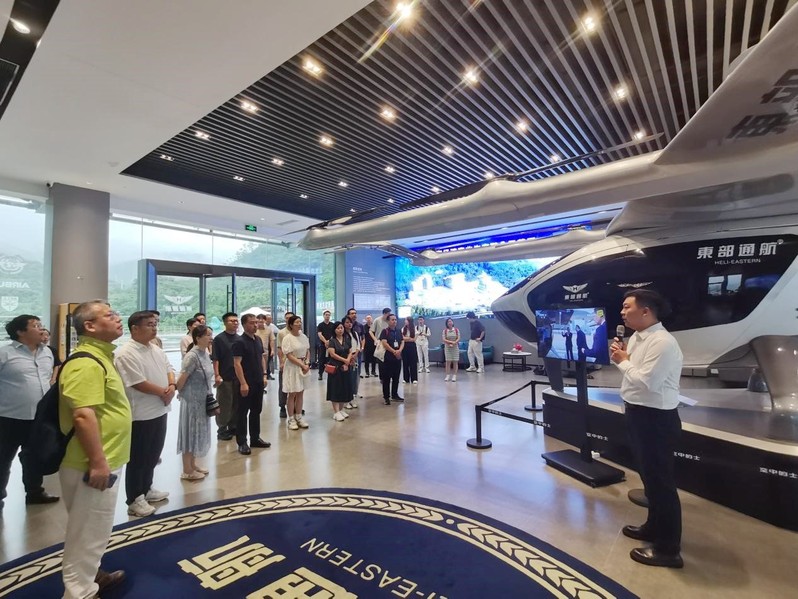
Faculty members conduct a field study at Eastern General Aviation in Yantian District
The program also focused on community-level governance and people-centered development. Faculty members visited Yumin Village Community and the Shenzhen Party and Mass Service Center, where they learned about the transformation of Yumin Village, widely known as one of China’s earliest “10,000-yuan household villages.” They also examined Shenzhen’s practices in building a system of community-level governance based on collaboration, participation and shared benefits, gaining a deeper understanding of the modernization of grassroots governance in a megacity.
On the morning of August 28, Chen Lei from the Shenzhen Reform and Opening Up Executive Leadership Academy delivered a lecture titled “Studying and Implementing General Secretary Xi Jinping’s Important Remarks on New Quality Productive Forces: Shenzhen’s Experience in Industrial Transformation and Upgrading.” The lecture explained the key dimensions of new quality productive forces and examined Shenzhen’s experience in industrial upgrading, technological innovation and the transformation of growth drivers.
The summer training program was part of the School of Marxism’s efforts to strengthen the connection between theoretical teaching and social practice. Through lectures, field visits and on-site research, participating faculty members deepened their understanding of Shenzhen’s reform and development while collecting valuable materials and cases for classroom teaching.
The School will incorporate the outcomes of the program into its ideological and political theory courses in the new semester, bringing Shenzhen’s experience in reform, innovation and urban governance into the classroom. Through these efforts, the School aims to further enhance the relevance and effectiveness of ideological and political education and guide students to carry forward the spirit of reform and opening up, embrace their responsibilities in the new era, and contribute to building a strong country and advancing national rejuvenation.